Best EDC Knives: Benchmade vs. Buck vs. Victorinox Ranked by Durability
Three of the most recommended everyday carry knives ranked by our Durability Index. We compare blade steel, lock mechanisms, and real-world longevity to find which one is actually worth carrying for years.
Not all pocket knives are EDC knives.
The $20 knife on the grocery store endcap will open boxes and cut zip ties. So will any folding blade you find in a gas station display case. But "can cut things" isn't the standard. The standard is: will this knife still be in your pocket in 10 years, working exactly the same as the day you bought it?
That's a different product. And it narrows the field fast.
We scored three of r/BuyItForLife's most-recommended folding knives on our Durability Index — warranty, materials, community sentiment, brand reputation, and repairability. Here's what the data shows.
#3 (Tied): Benchmade Pocket Knife → — 9.2/10 Ironclad

Price: $150-300 | Warranty: 10/10 | Materials: 9/10 | Community: 9.5/10 | Brand: 8.9/10 | Repairability: 8/10
Benchmade earns its price on blade steel alone. CPM-S30V and S90V are powder metallurgy steels — finer carbide structure than conventional stainless, which means better edge retention. You sharpen a CPM steel blade less often, and when you do sharpen it, the edge holds longer. For a working knife, that matters more than most marketing claims.
The AXIS lock is equally serious. A hardened steel bar rides in milled stainless liners — one of the strongest folding lock designs ever put in a production knife. The double 420J stainless liner construction adds rigidity without dead weight. And when the knife needs sharpening, Benchmade's LifeSharp service does it for free. Permanently.
Weaknesses: The Omega springs that drive the AXIS lock are a known failure point. They snap after heavy use. Benchmade sends replacements for free, but you'll need them. QC is inconsistent at this price — off-center blades are more common than they should be for a $200 knife. Handle materials on the mid-range models (Grivory, Noryl GTX) feel noticeably cheaper than the hardware they're attached to.
Who buys this: People who want premium blade steel and don't mind paying for it. The LifeSharp program makes it the right choice for anyone who uses their knife hard and hates sharpening.
#3 (Tied): Buck Knives 110 Folding Hunter → — 9.2/10 Ironclad

Price: $55-80 | Warranty: 10/10 | Materials: 9/10 | Community: 9.4/10 | Brand: 9.3/10 | Repairability: 8.3/10
The Buck 110 has been in continuous production since 1964, manufactured in Post Falls, Idaho. That's not a marketing point — it's evidence. A product survives 60 years in the same market because it holds up in the field.
The blade steel is 420HC stainless, heat-treated to 58-60 HRC. It's not a premium steel, but it's the right steel. Hard enough for real edge retention, soft enough to sharpen on a basic whetstone. You don't need a Lansky system or a belt grinder. A flat stone and a few minutes restores the edge. That repairability score of 8.3 — highest of the three — reflects that.
The lock-back mechanism is the same design that's earned its reputation over six decades: a rotating bolt drops into a notch in the blade tang. It's mechanically simple, extremely strong, and doesn't rely on springs or bars that need periodic replacement. The nickel silver bolsters and leather handle don't just survive — they develop character. This is a knife that looks better at 20 years than it did at unboxing.
The Buck Knives Forever Warranty covers workmanship defects for the life of the product. No registration, no fine print gauntlet.
Weaknesses: The 110 requires two hands to close safely — the lock-back design doesn't lend itself to one-handed operation. 420HC isn't CPM steel; edge retention is real but not exceptional. The leather handle will mold if stored wet consistently. At 3.75 inches, the blade exceeds legal carry length in some jurisdictions — check local laws. Hinge pins can develop play after years of heavy use.
Who buys this: Anyone who wants a lifetime knife at a fraction of the premium price. The Buck 110 delivers durability per dollar that nothing else in this comparison touches.
#1: Victorinox Swiss Army Knife → — 9.4/10 Ironclad

Price: $30-80 | Warranty: 10/10 | Materials: 9/10 | Community: 9.8/10 | Brand: 9.8/10 | Repairability: 8/10
The Victorinox scores highest in this comparison — and it costs the least. That's worth sitting with for a second.
The Victorinox community sentiment score of 9.8 is the highest of any knife in our database. The brand reputation score of 9.8 reflects 129 years of continuous production in Ibach, Switzerland, and an unbroken contract supplying the Swiss military. These numbers aren't opinions. They're the aggregate of decades of real-world ownership data from people who use their tools.
The blade steel is X55CrMo14 — 15% chromium for serious corrosion resistance. It's not a premium cutting steel, but it handles moisture better than most folding knives at any price point. The scales rivet directly to stainless liners. Each tool runs on its own individual leaf spring, so a broken toothpick spring doesn't compromise your scissors or your blade. The mechanical architecture is deliberately independent.
The Victorinox no-questions lifetime warranty replacement is exactly what it sounds like. Send it in broken for any reason, get a replacement. Victorinox has honored this policy consistently enough that it's become a standing reference in r/BuyItForLife discussions going back years.
Weaknesses: The small accessories — toothpick, tweezers — slide out and disappear. This happens to everyone eventually. The blade steel is softer than premium knife steels; it won't hold an edge as long as CPM-S30V under demanding use. The plastic scales can crack if dropped on hard surfaces. If your primary use case is heavy cutting work, a dedicated blade like the Benchmade or Buck is the better tool.
Who buys this: Anyone who wants one tool that covers daily carry needs from package opening to emergency repairs. The Victorinox isn't the best dedicated cutting knife in this comparison. It's the best all-purpose carry tool, at the best price, with the strongest long-term track record.
Bonus: Leatherman Multi-Tool → — Not Just a Knife
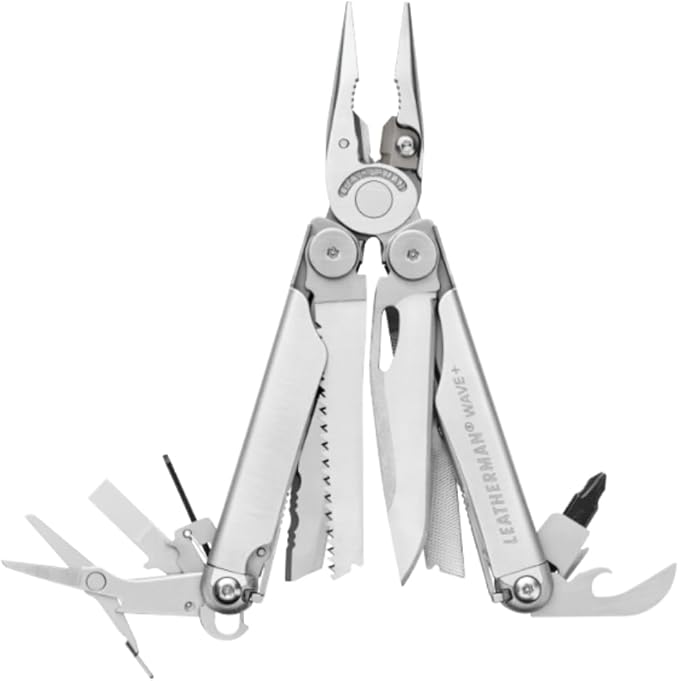
If a knife isn't your only EDC tool, the Leatherman Multi-Tool (9.1) gives you pliers, a knife, and 15 other tools in one frame. 25-year warranty, every component user-serviceable. It won't replace a dedicated blade for serious cutting work — but for daily carry utility, nothing else competes on that footprint.
The Recommendation
Budget: Buck Knives 110. At $55-80, it scores identically to the Benchmade on the overall Durability Index (9.2), has the highest repairability score of the three (8.3), and comes with a Forever Warranty. For the money, nothing here competes.
Best value: Victorinox. The highest Durability Index score in this comparison (9.4), the strongest community endorsement (9.8), and a starting price of $30. If you carry one thing in your pocket for the next decade, make it this.
Premium: Benchmade. CPM blade steel and the LifeSharp service justify the price if you use your knife heavily and want the best edge retention available in a production folding knife. Accept the QC inconsistency as a trade-off. If your blade comes off-center, Benchmade's customer service will sort it.
One knife for 10 years isn't a fantasy. All three of these deliver it. The only question is which trade-offs fit how you actually carry and use.
More from the Blog
Lifetime Warranties That Actually Work: 8 Brands That Back Their Products
Not all lifetime warranties are equal. We looked at which brands actually honor their guarantees — and which ones bury exclusions in the fine print.
Best BIFL Kitchen Gear: 10 Products That Actually Last a Lifetime
The 10 highest-rated kitchen products on our Durability Index — cookware, knives, appliances, and tools that the buy-it-for-life community swears by.
The Hidden Cost of Cheap: Why Buying Durable Saves You Thousands
Cheap products cost more over time. We did the math on cookware, tools, boots, and appliances to show exactly how much you save by buying durable, buy-it-for-life products.